Blog
Is a Fold and Iron Machine Worth Adding to Your Home?

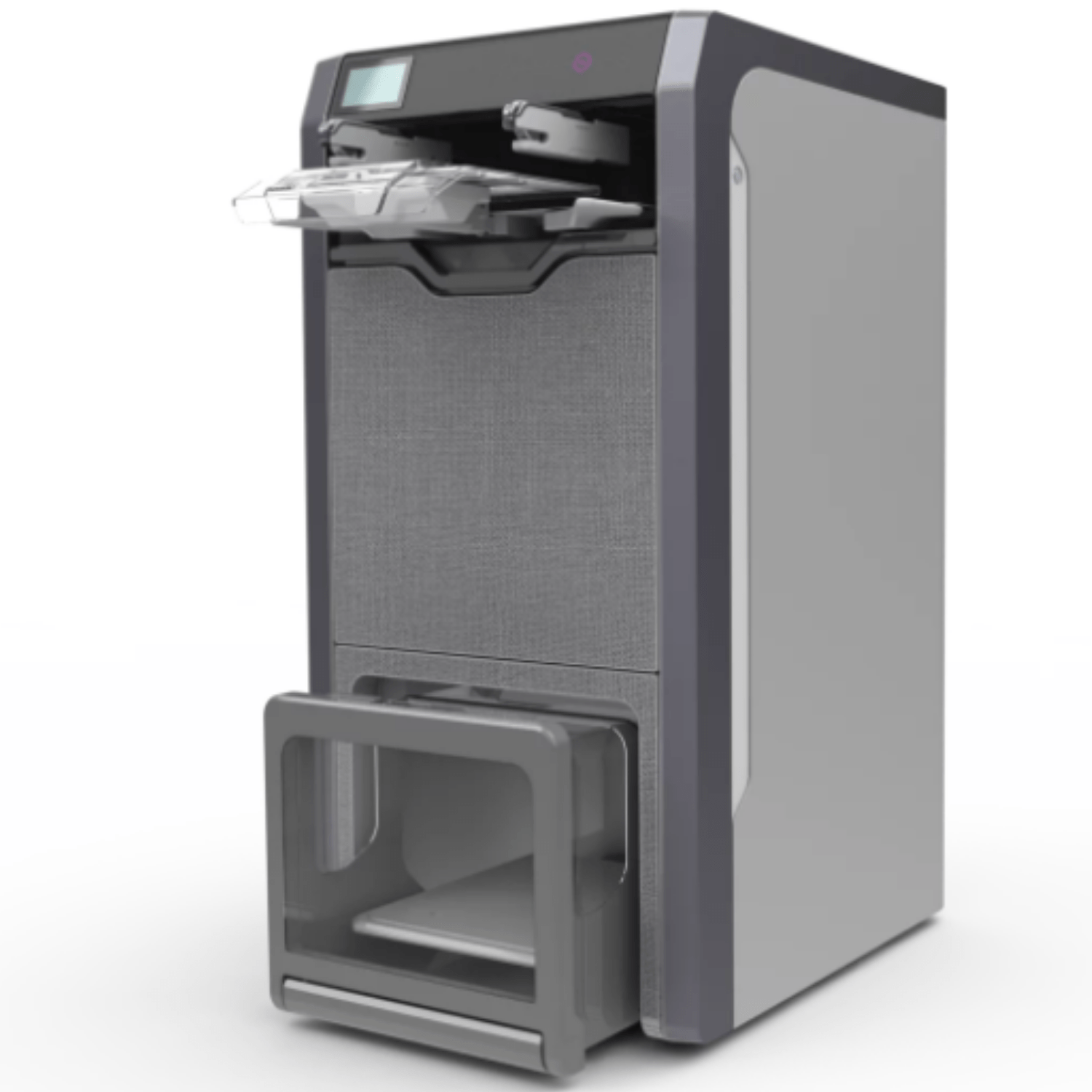
Most of us have stood in front of a teetering laundry basket and imagined a simpler life: one where shirts come out folded, trousers are neat, and towels are stacked without a second thought. A fold and iron machine promises exactly that kind of calm. In this long-form guide I’ll walk you through how these machines work, when they make sense for everyday life, the trade-offs to consider, and how the current FoldiMate range stacks up in real homes. Throughout, you’ll find concrete tips based on real use cases, clear price cues and links to models so you can look deeper into the options.
Why consider a fold and iron machine for your routine?
Time is the headline reason. Many households spend hours each week folding, pressing and sorting clothes. A fold and iron machine takes the repetitive, small-motion work away, turning piles into neat stacks while you do other things. For parents juggling kids, remote workers carving out productive hours at home, or anyone who simply prefers to spend free time differently, the convenience is immediate and tangible. But convenience isn’t the only benefit. These machines can deliver more uniform folds than hurried hands, help reduce wrinkles for easy storage, and make dressing for work or school a smoother experience. If you care about presentation—whether for client meetings or to keep uniforms tidy—consistency matters. That said, the value depends on your household’s volume, fabric mix, and tolerance for upfront investment. For a single person who wears mostly T-shirts and jeans, the payoff timeline differs from a family of five with daily loads.
Another advantage is repeatability: once you set a routine, the machine keeps delivering the same result, which makes organizing drawers and wardrobes predictable. That predictability helps when packing for travel, preparing school uniforms, or keeping a small wardrobe in rotation. There are also ergonomic considerations: repeated folding can strain shoulders and lower back over time, so reducing that repetitive movement can be a meaningful comfort improvement. Whether those benefits justify the cost comes down to observing your weekly laundry rhythm closely for a few weeks—count the minutes you spend folding, note the frustration points, and then consider whether automating those steps would buy hours that matter to you.
How fold and iron machines actually work
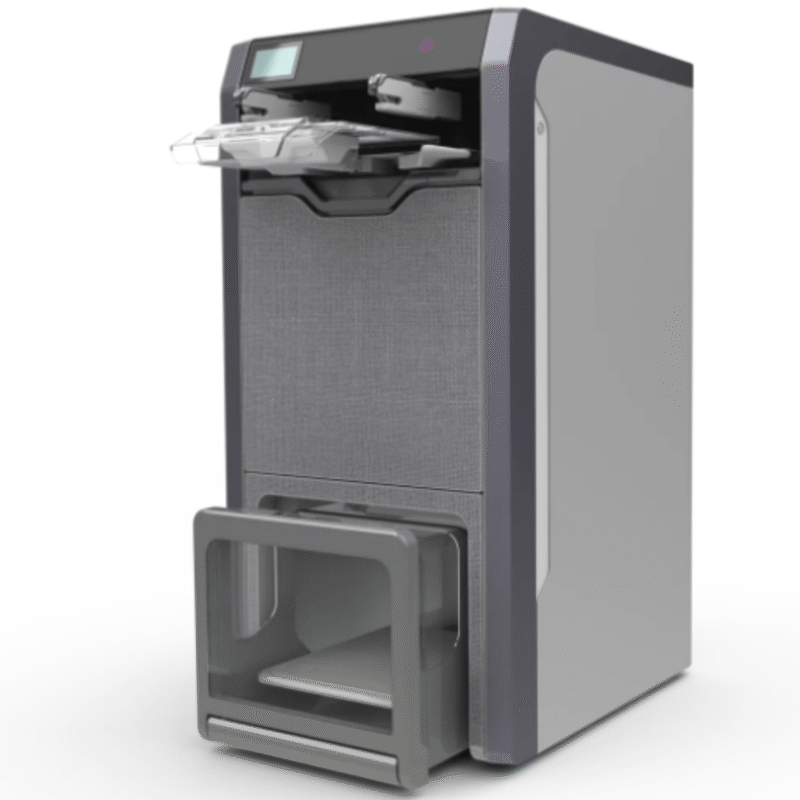
At a basic level, a fold and iron machine automates three tasks: flattening, folding and finishing. Each model approaches these tasks differently, but the core process is similar. First, you feed a garment into the machine’s intake. Some machines use clamps or guide rails to position the fabric, while others rely on sensors to detect size and shape. Next, a set of arms, rollers and folding plates create consistent creases and folds, often finishing with a brief application of steam or gentle heat to reduce wrinkles. The result aims to be ready-to-store clothing rather than a fully pressed, freshly ironed shirt. Depending on the model, there can be options for fold style—compact for drawers or looser for hanging—plus settings for fabric types and delicate cycles.
Practical experience shows that these machines handle a wide range of everyday items well: T-shirts, casual shirts, trousers, and towels are the usual winners. Heavier fabrics like denim and bulky sweatshirts sometimes need pre-treatment or a different folding approach, and very small or oddly shaped items (socks, lingerie) may require manual attention. Steam-equipped models can smooth out light wrinkles effectively, while simpler folders still outperform hurried hand folding in speed and consistency. Sensors and software improve over time, too—newer models learn to be faster and more sensitive to fabric differences, which is why model generation is important when you compare choices.
Meet the FoldiMate family: models and what they bring
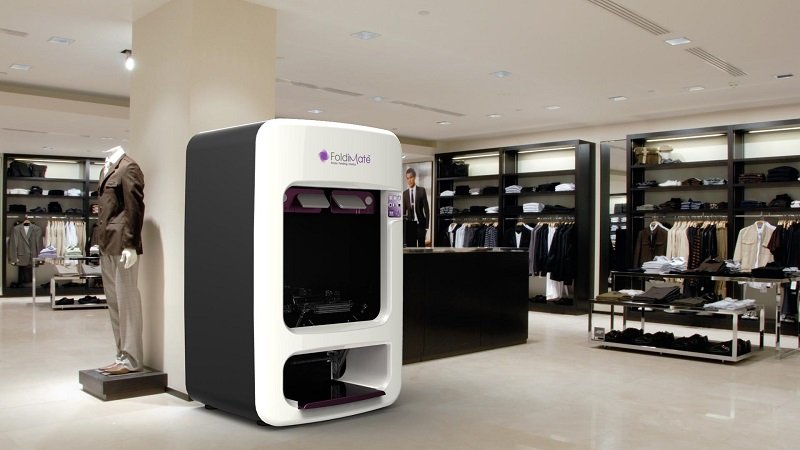
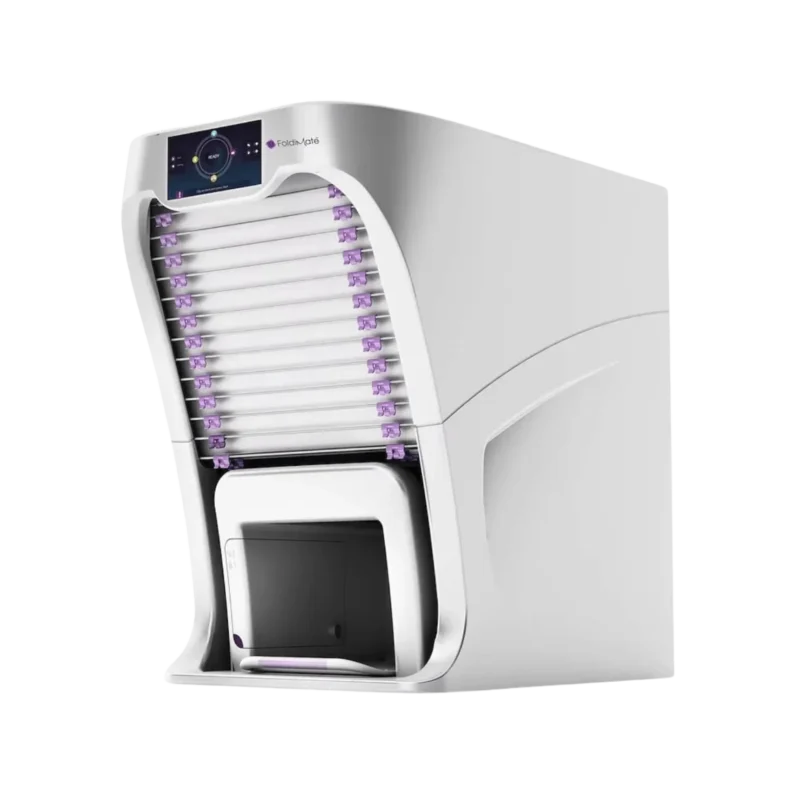
FoldiMate has positioned itself as a brand with multiple tiers for different needs. If you want an accessible entry point, the FoldiMate – The authentic automatic laundry folding machine and robot is presented as a reliable baseline, currently offered at an attractive price point. For those who want the latest speed and wrinkle control, the FoldiMate 2025 focuses on faster cycle times and higher wrinkle removal. At the top is the FoldiMate Elite, designed for heavier use, professional-grade finishing and expanded fabric compatibility.
For buyers, the key differences come down to speed, finishing quality and price. The original model offers immediate value if you mainly want consistent folding without a premium finish. The 2025 generation promises improved speed—about three seconds per fold in its promotional claims—and better wrinkle reduction with steam. The Elite steps up steam performance and motor power to handle mixed loads more aggressively, which is useful if you frequently process work shirts, dress trousers or varied fabrics. I recommend thinking in terms of your weekly volume: if you fold a few loads a week, the base model may be sufficient; if you’re processing many items daily or seeking near-perfect results, consider the 2025 or Elite options.
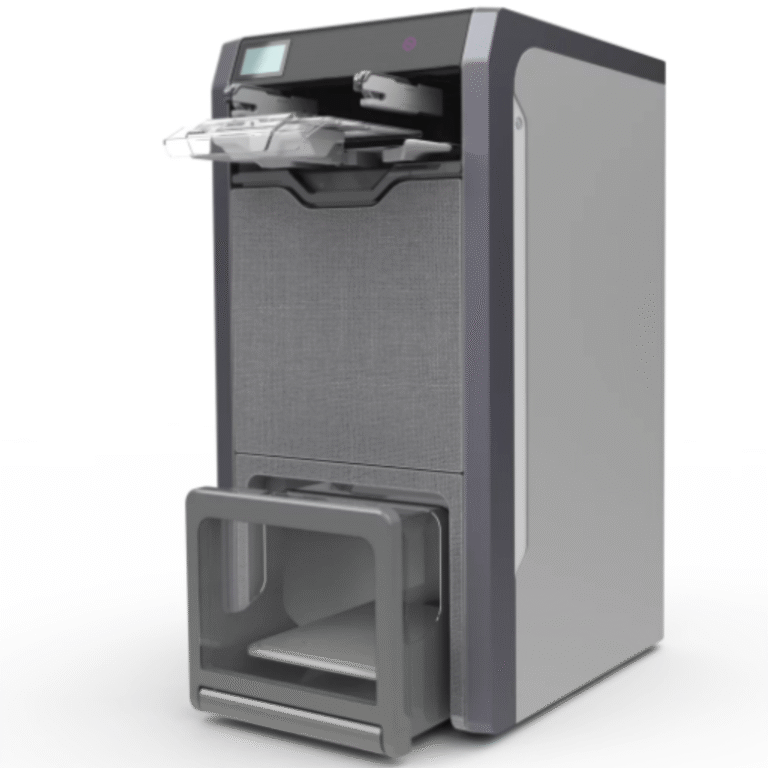
Practical price signals
Price is more than a number; it signals capacity and intended use. The authentic FoldiMate model is positioned for budget-conscious buyers who want automation without the top-tier finishing. The original FoldiMate has been promoted at a lowered price that makes experimenting with the technology less risky. The FoldiMate 2025 sits in the middle with faster cycles and better steam handling, while the FoldiMate Elite is a premium choice for those who want professional-level results at home. When you weigh price versus time saved, estimate how many hours per month you currently spend folding and what you’d do with that reclaimed time. For some households the math is immediate; for others, the decision is about reducing stress and lifting daily friction rather than pure financial return.
Real-world use cases and how to integrate a machine into daily life
The best way to decide if a fold and iron machine belongs in your home is to map its role into a weekly routine. Start by tracking laundry tasks for a week: loading, drying, folding, ironing and putting away. Note peak times—morning rush and evening prep—and potential bottlenecks, like a spouse or child who needs a uniform ready each morning. If you can place machine use at a predictable time—say, folding immediately after drying in the early evening—you’ll keep the system flowing. Consider a staging area near your dryer or a small landing shelf where folded stacks collect. For a compact laundry setup, the FoldiMate 2025 emphasizes a smaller footprint in its design notes, which helps in tight spaces.
There are also lifestyle-specific benefits. Families with school-aged children often use a machine to eliminate daily pile-ups and make mornings smoother; professionals value wrinkle reduction for polished appearances without daily ironing. Rental hosts or small bed-and-breakfast operators might find consistent presentation useful, too. When I tested similar machines in a shared house, the biggest behavioral change wasn’t speed alone but the tendency to keep things orderly—when folded stacks are available, people put items away rather than living out of baskets. That psychological nudge toward tidiness is subtle but real.
Maintenance, space and practical constraints
Owning a fold and iron machine requires simple upkeep. Expect occasional cleaning of the intake sensors, descaling if you use steam frequently, and surface cleaning to remove lint. Check the manufacturer’s guidelines for recommended detergents and steam cartridges if applicable. Space is another factor: even compact models need a small footprint plus clearance for loading and unloading. Think about where it will live—near the washer-dryer stack or on a laundry room shelf—and whether you need additional shelving to stage items. Noise levels vary by model; although many are designed for home use, heavier motors in premium units can be audible. If noise is a concern, choose a quieter model or plan use when the house is active.
When planning for purchase, also consider service and support. Look for clear warranty terms and accessible customer service channels. If a model is promotionally discounted, check whether support is bundled or sold separately. If you live in a smaller apartment, pay special attention to the unit’s width and depth—compact models like the FoldiMate 2025 promise a smaller profile. If you anticipate frequent steam use, the FoldiMate Elite might justify itself with more robust components and longer duty cycles.
Side-by-side comparison
| Model | Speed & Finish | Best for |
|---|---|---|
| FoldiMate (authentic) | Reliable folding, basic wrinkle reduction | Experimenters, small families, budget buyers |
| FoldiMate 2025 | Faster cycles, better steam finishing | Busy households, tight spaces, daily use |
| FoldiMate Elite | Premium finish, high duty cycle | Professionals, high-volume users, small businesses |
Tables are useful for spotting practical differences, but remember that real-life performance depends on the fabric mix and how you use the machine. For example, to get the best results from the FoldiMate Elite, treat heavy denim separately and consider a brief pre-flat when items are especially wrinkled. Conversely, the authentic FoldiMate is forgiving for everyday tees and household linens and can save surprising time without a steep learning curve.
Tips for getting the most value
Start small: feed only similarly sized items in a single run so the machine produces consistent results. Over time you can mix items as you understand how the machine handles different shapes. Use the machine right after the dryer when garments are still slightly warm—that makes folding and light wrinkle removal easier. Create simple staging rules: socks and small delicates stay out of automatic runs, shirts are buttoned and smoothed briefly, and trousers are shaken out before feeding. Keep a small basket for exception items that need manual attention so they don’t interrupt the automated flow. Finally, make the machine part of a routine—folding at the same time each day reduces pile-up and normalizes putting clothes away immediately.
Another practical tip: keep a small kit of cleaning supplies nearby and schedule a weekly quick check—wipe down feeding surfaces and empty lint. If your model uses water for steam, use filtered water if your tap is hard to reduce scaling. When traveling or hosting, use folded stacks from the machine to speed room turnover or packing. And don’t be afraid to combine approaches: use the machine for daily casual loads and a traditional iron for special garments. Many users find the mix gives the best balance of speed and finish.
Where to learn more and compare options
Before you decide, read real user reports and detailed comparisons. The site’s product pages are a good starting point: check the authentic FoldiMate, the FoldiMate 2025, and the FoldiMate Elite pages for specs and current pricing. Also useful are background articles that explain whether this category fits your home, such as Is an Automatic Laundry Folder Right for Your Home?, practical simplification tips in How Can Auto Folding Clothes Machines Simplify Your Laundry? and model-fit guidance in Which clothes folder machine fits your laundry routine? These pieces help you match a model to habits rather than impulse.
If you want independent background on laundry care and fabrics, general references like Wikipedia can be helpful for terms, and broader product marketplaces such as Amazon show diverse user reports. Searching the web for demo videos gives insight into real cycles—try a targeted search on Google for model walkthroughs. Combining hands-on reviews with the product pages lets you weigh manufacturer claims against user experience.
FAQ
Will a fold and iron machine replace a traditional iron?
Not entirely. A fold and iron machine is designed to fold and reduce everyday wrinkles, producing clothing that’s ready to store and wear casually. For crisp dress shirts, tuxedo-level smoothness, or very tailored garments you’ll still want a traditional iron or a professional press. That said, many users find the machine reduces the need for frequent ironing by handling the bulk of daily wear like T-shirts, casual shirts and trousers. If your wardrobe is mostly casual or if you’re willing to reserve ironing for special occasions, the machine can cut your ironing workload dramatically.
How long does a typical cycle take?
Cycle time varies by model and garment type. Newer models aim for a few seconds per item for simple pieces; heavier or more complex items take longer. For example, some latest-generation units advertise about 3 seconds per fold for T-shirts, which translates into a rapid throughput for a household load. Expect initial setup and handling to add overhead; but once you’ve dialed in a routine, the time-per-item advantage becomes clear. If rapid throughput matters—say you prepare many shirts each morning—look closely at the 2025 or Elite generation claims and real-world tests on the product pages.
Are these machines difficult to maintain?
Maintenance tends to be straightforward: periodic surface cleaning, sensor wipes, and descaling if you use steam. Most manufacturers provide clear service intervals and easy-to-replace parts. Keep the intake lint-free and follow water recommendations for steam. If you plan heavy usage, consider models with robust warranties and easier access to service. The product pages for each FoldiMate model include maintenance notes and warranty information so you can plan ahead.
Which FoldiMate model should I try first?
Start with the model that fits both your budget and volume. If you want to test the category, the authentic FoldiMate is a sensible entry. If you have a busy household and want faster cycles with better wrinkle control, the FoldiMate 2025 is a strong middle option. For heavy-duty needs and near-professional finishing, consider the FoldiMate Elite. The right choice depends on your weekly volume and the importance of finish versus speed.
Final considerations before you buy
Buying a fold and iron machine is both a practical and personal choice. Think about who will use it, how often you’ll run it, and the kinds of clothing you wear. If time savings and reduced daily friction are priorities, the investment can pay back in stress reduction and reclaimed time. If your wardrobe leans formal, pair the machine with a good iron for occasional finishing. When you compare models, use the manufacturer pages for up-to-date specs: the authentic FoldiMate, the FoldiMate 2025, and the FoldiMate Elite pages are the best places to check current offers and detailed specs. You can also read related articles on whether an automatic folder fits your home and how to adapt it to your routine: Is a Foldimate Clothes Folding Machine Right for You?, Is Foldi Mate the Right Laundry Helper for Your Home?, and Is an Automatic Laundry Folder Right for Your Home?.
In the end, a fold and iron machine can be a small home upgrade that yields a big daily return: less friction, neater storage, and a more relaxed start to the day. If you’re curious, explore the product pages for hands-on detail, watch a few demo videos, and consider a trial period if available. With the right expectations, these machines can shift a portion of household work from repetitive chore to effortless routine.